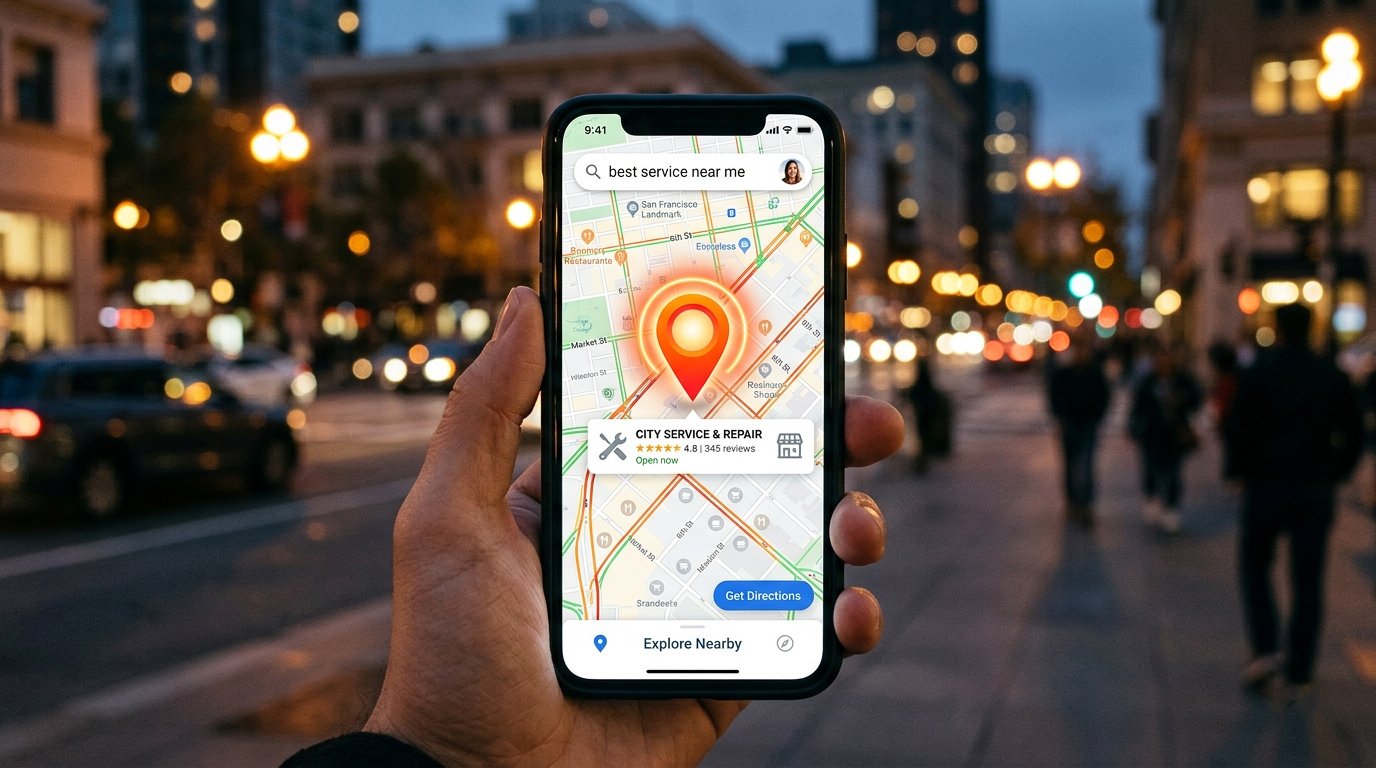
In a world of global e-commerce, it’s easy to overlook the immense power of local search. Yet, according to Google, nearly one-third of all mobile searches are related to location. Searches like “best pizza near me” or “lawyer in downtown” are not just queries; they are high-intent signals from customers who are ready to buy. If your business isn’t optimized for these searches, you are invisible to a massive segment of your potential market.
Dominating local SEO is the key to capturing this valuable traffic. It’s a specialized discipline that requires a unique set of strategies beyond traditional SEO. This is particularly crucial for businesses with multiple locations, a core focus of our Multilocation Local SEO services.
Here is your 5-step guide to winning the local search battleground.
Step 1: Master Your Google Business Profile (GBP)
Your Google Business Profile is the single most important element of your local SEO strategy. It’s your digital storefront on Google Search and Maps.
- Complete and Optimize: Fill out every single section of your profile: services, products, business hours, photos, and a detailed description. Use keywords naturally.
- Encourage Reviews: Actively ask your happy customers to leave reviews. Positive reviews are a massive ranking factor and build trust with new customers.
- Use Google Posts: Regularly share updates, offers, and news through Google Posts to keep your profile active and engaging.
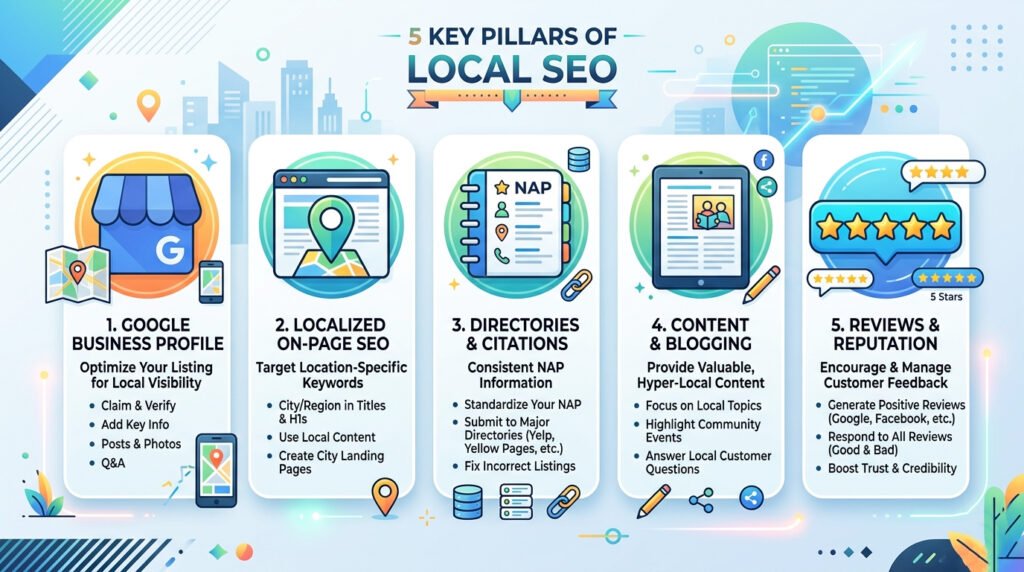
Step 2: On-Page Local SEO Signals
Your website itself needs to signal to Google where you are and what you do.
- NAP Consistency: Ensure your Name, Address, and Phone number (NAP) are consistent across your entire website, especially on the homepage, footer, and contact page.
- Create Location-Specific Pages: If you have multiple branches, each location needs its own dedicated page. This page should include the unique address, hours, a local map, and content specific to that area. Our partners at Power Web Solutions are experts at designing these high-converting location pages.
Step 3: Build Local Citations and Backlinks
Citations are mentions of your business’s NAP on other websites, like online directories (Yelp, Yellow Pages) and industry-specific portals.
- Citation Consistency: Just like on your website, your NAP must be perfectly consistent across all directories.
- Earn Local Links: Get featured in local blogs, sponsor a local event, or join your local chamber of commerce. These local links are powerful signals of your community relevance.
Step 4: Create Hyper-Local Content
Create content that is genuinely useful and relevant to your local audience.
- Blog about Local Topics: Write articles like “The Top 5 Family-Friendly Parks in [Your City]” or “A Guide to [Your Neighborhood]’s Best Coffee Shops.”
- Showcase Local Projects: Feature case studies or portfolio items from local clients. This demonstrates your connection to the community.
Step 5: Monitor and Respond
Local SEO is not a “set it and forget it” task.
- Respond to All Reviews: Thank customers for positive reviews and professionally address negative ones. This shows you care.
- Track Your Rankings: Use tools to monitor your rankings for key local search terms and track your performance against competitors.
By implementing a robust local SEO strategy, you can transform your business from a needle in a haystack into a prominent landmark in your local community, driving both online traffic and real-world foot traffic.
Ready to put your business on the map? Explore our specialized Local SEO services and let’s dominate your local market together.